An exploration of the vibrational qualities of the physical world by Mark Stephen John.
22-Ti – Titanium

Titanium is the 22nd element in the Periodic Table. It is a lustrous white metal that is very strong and light. Its primary uses are for airplanes and spacecraft because it easily alloys with aluminum, iron and molybdenum. It is also found in golf clubs, bicycles and other sports related equipment. Although there is no know biological role, titanium bonds with bones and is used for joint replacement and implants.
Titanium Scale
Titanium Sound Sketch

Strontium is the 38th element in the periodic table. It is classified as an alkaline earth metal. Strontium is found mainly in the minerals celestite and strontianite. The element is named after Strontian, Scottland. It is very reactive in air and water, catching fire in water and oxidizing to turn yellow in air. It is very similar in its characteristics to Calcium and is incorporated into bones in the same way. Some studies indicate that the use of Strontium increased bone density, however, there is not a known use for Strontium in the body.

This appears to be the primary use in humans. Because of this similarity, radioactive Strontium-90 is also readily absorbed by the body and used by the bones and has been attributed to causing bone cancer. Strontium-90 is a radioactive product of nuclear testing and from nuclear power plant accidents.
Strontium Scale
Strontium Sound Sketch
See https://musicoftheperiodictable.com/strontium/ for the individual tones.

Wikipedia describes Bromine as a fuming red-brown and one of two elements that are liquid liquid at room temperature. It is toxic and corrosive and although found in the body in trace amounts was not thought to be useful in human metabolism. Its main role appears to be in the immune system, combining to create a toxic response to various viral and bacterial invaders.

Isolated in 1825, Bromine has become an industrial product used in pharmaceuticals, agriculture and flame retardants, among other things. Bromine as a gas is a major chemical responsible for the degradation of the ozone layer in Antarctica. A large portion of this comes from agricultural herbicides and pesticides.
Here is the Bromine Scale.
This is a short sound sketch of the tones of Bromine.

One year has elapsed since I began writing about healing and vibration, and, color and sound. What a wonder filled journey that has ranged far beyond my initial expectations and explorations that are in fields more diverse than vibrational healing. Little did I expect that along with crystals, aromatherapy, sound healing, song meditation and chakra balancing, that I would find agriculture as a major healing modality for the earth. Yet, even the most distant subjects have direct and prescient applications in World Healing. I wrote about the work of Masanabu Fukuoka, One Straw Revolution, and how his agricultural approach helped heal and enliven the earth. Stephen Harrod Buhner’s, The Secret Teachings of Plants, reconnects heart, plants and humans in the quest to regain health and balance. And now I am working with the concepts of “Restoration Agriculture: Real-World Permaculture for Farmers” by Mark Shepard. Permaculture is a profound gesture towards shifting the energy of the earth from dissonance to consonance. When the earth is healthy, the creatures of the earth are healthy. We are intertwined.
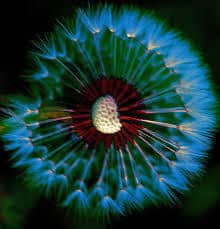
Shepard lays out a compelling story about the decimation of our Earth’s health through the act of conventional row crops such as corn, soybeans and wheat. He notes that every culture that has depended on row crops has collapsed. He shows that, contrary to the popular myth, the crops grown in the United States today, do not feed the world. In fact, on page 159 Shepard states that approximately 17% of the 12.1 billion bushels of corn are used for human consumption. The rest is used as livestock feed, to make ethanol and for industrial ingredients. There are more compelling statistics that include the actual nutritional value, or rather, the nutritional deficiencies of conventionally raised row crops. These, however, you can find by reading the book. (more…)

Selenium is one of the more elusive elements. It is a low density silvery metal, almost as light as aluminum but with a much higher melting point. It combines easily with other elements and has a very low incidence on the earth. However, now it is being used in combination with other elements in bats, golf clubs and in some airplanes. It is sometimes viewed as one of the rare earth metals since it has a number of similar characteristics.

I looked to find other, more esoteric literature on Scandium, but was unable to find any real information; hence, a short post.
Here is a short sound sketch in the Key of Scandium

After a few months away from publishing, I am excited to return to the Web Log of my exploration of vibrations and their power to heal. This post inaugurates a new, rebuilt site where all of the work is accessible from one place. Now the periodic table with the tones and colors for those who want to see the specifics is on an individual tab and my musings about how it all interconnects is on its own page. I’ll be working and refining the site as I integrate the different aspects of this project.
—————————–
Last February, while on Maui, I was given a copy of Frank Wilczek and Betsy Devine’s book, “Longing for the Harmonies: Themes and Variations from Modern Physics.” And though they would be somewhat or even greatly aghast that they were being quoted in such a venue, I find some of their work quite fascinating. Having grown up with a physicist and witnessing the apparent lack of resonance with the spiritual aspects of the world, I get a bit shy using some of their observations to support the research that I am doing. That said, on page 17 Wilczek and Devine write:
“When a substance is heated and radiates light into empty space, we see a flame, or emission, spectrum. When the same substance is kept cold, it tends to absorb exactly the same pure colors it radiates when hot. In each case, energy flows between light and matter, from the hotter to the colder stuff. The bright lines of emission and the dark lines of absorption both indicate that certain colors of light exchange energy with a given substance more readily than do others.”
When I read this, I literally had to pause to consider how much these few lines affected my perception. This seemed to indicate that matter is breathing light, out-when excited, and, in-when resting. Extending that observation, we are beings of light and breathe in and out specific colors based upon our physical, mental and spiritual composition. Each person, plant, animal, mineral has its own specific resonance with light. Therefore, what we do, eat, think, creates a resonance with light that is who we are. (more…)

I am coming back to revisit an element that I examined very early in the process of learning about the color of the spectra from individual materials. Lithium, is predominantly green, though it has orange, red and infrared in its fingerprint.
I now understand that the colors are emitted by electrons as they return to a resting state after being excited by photons. Each element sparkles uniquely, though like fireworks, there can be many smaller and less predictable colors formed. The colors I use, are the ones that shine persistently. In addition, everything that I thought that I knew about electrons is in question. If you really press a physicist, they will need to admit that the electron’s path is not really known. It could travel to ends of the universe and back. Most likely, it is not in an orbit around a nucleus, but rather playing with other electrons in a field of energy. (more…)

Magnesium is the 12th element in the periodic table. Again I continue to find fascinating aspects of the elements. What truly surprised me was the structure of hemoglobin and chlorophyll. Their basic structures are identical except for Iron is in the center of hemoglobin and Magnesium is in the center of chlorophyll. The outer structures differ and this illustration notes the similarities. Magnesium is essential for human metabolic processes and is needed for over 300 biological processes. (more…)
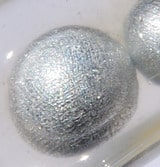
Potassium is the 19th element. It is a soft silvery metal easily cut with a knife. Its density is less than water and it floats, however, it is so reactive that it spontaneously catches fire when it touches water, burning with a purple flame. It is one of the most highly reactive elements and is not found in a pure state. All cells use potassium and it is an essential element for life. Because it oxidizes upon contact with dry air, it must be stored under oil. (more…)
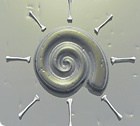
Calcium, the 20th element, is essential in the life of a cell. Calcium ions move in and out of the cytoplasm and act as a signal for metabolic processes. Bones, teeth, shells, limestone, dolomite, quick lime for cement, the formation of stalagmites and stalactites are all calcium-based materials. (more…)
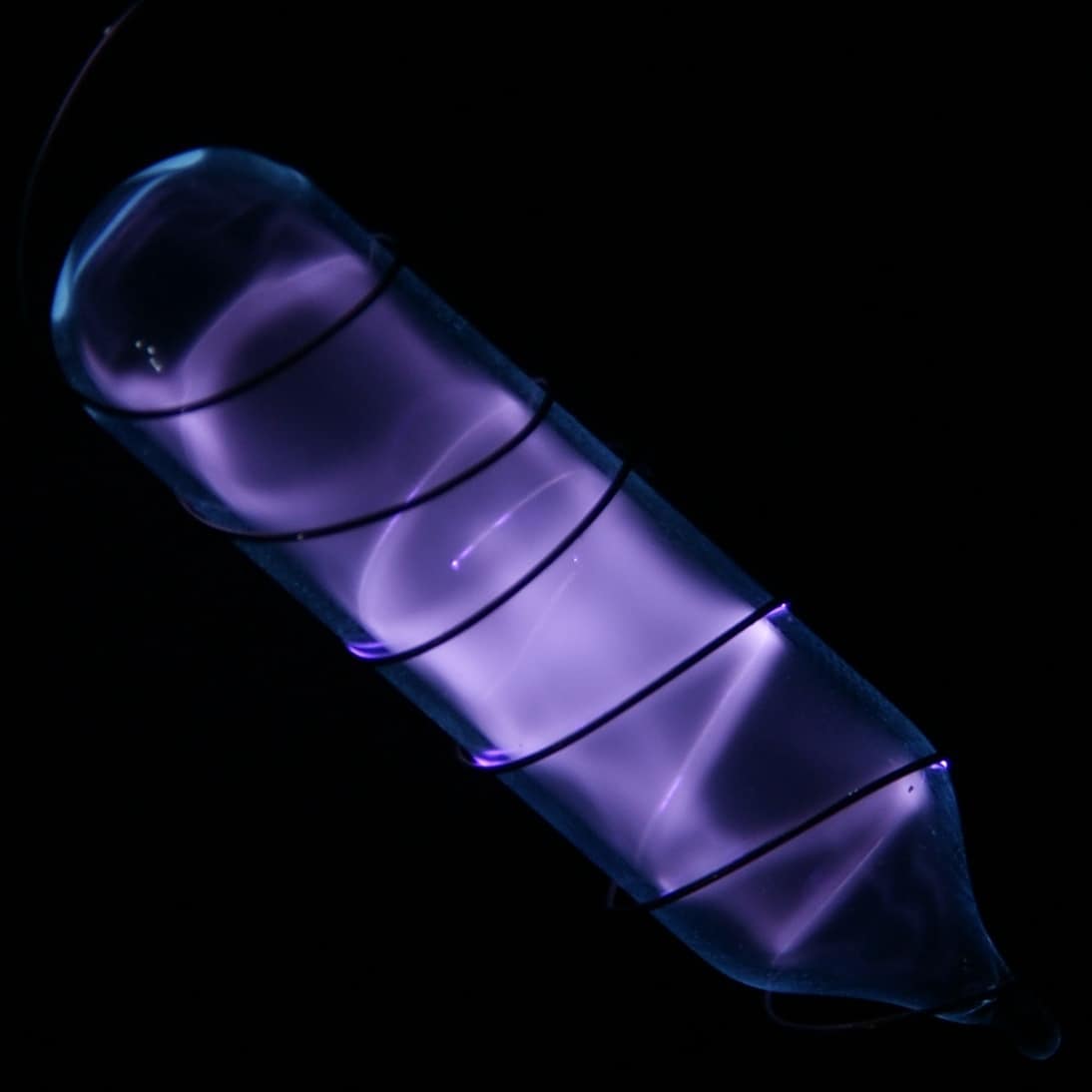
Hydrogen is the most abundant element in the universe. It is estimated that 90% of all matter is hydrogen. It has interesting qualities that make it a unique element on our material plane. Its name comes “from the Greek words hydro (water), and genes (forming). Hydrogen was recognized as a distinct substance by Henry Cavendish in 1776.” “Although pure hydrogen is a gas, we find very little of it in our atmosphere. Hydrogen gas is so light that, uncombined, hydrogen will gain enough velocity from collisions with other gases that they will quickly be ejected from the atmosphere. On earth, hydrogen occurs chiefly in combination with oxygen in water, but it is also present in organic matter such as living plants, petroleum, coal, etc. It is present as the free element in the atmosphere, but only less than 1 ppm by volume. The lightest of all gases, hydrogen combines with other elements — sometimes explosively — to form compounds.” (Los Alamos Laboratory) (more…)

Selenium is an essential trace element in our bodies. Its name comes from the Greek word Selênê (Moon). It is also able to convert the sun’s energy directly into electricity and was one of the first elements used in photovoltaic panels. Selenium is used by our bodies in a number of proteins primarily helping cell health and as an anti-oxidant and for glutathione synthesis for liver health. Thyroid function, nail health, and, a few claim that our mental and emotional capacity is enhanced with this element. In my previous post, I mentioned how Joy Gardner (www.highvibrations.net) used the tones from selenium to help with a problem with her nails. Maybe in the future, I will give details of how she worked with these tones. (more…)
- « Previous
- 1
- 2
- 3
- 4
- Next »